


TREE PRUNING
What You Need to Know About Different Types of Pruning
What is the definition of tree pruning?
Pruning is when you selectively remove branches from a tree. The goal is to remove unwanted branches, improve the tree’s structure, and direct new, healthy growth.
What are the benefits of pruning?
Pruning is one of best things you can do for your trees. A proper prune is both an investment in the long-term health of your plants and in the overall look and safety of your property.
When you trim your trees, you get all these benefits!
-
Say farewell to dead, broken or damaged branches.
-
Save your property from potential damage from fallen branches.
-
When you remove old branches, you give trees the green light to put out healthy, new growth.
-
Train trees to grow on your terms so that branches won’t hang over the roof or stretch into power lines.
-
Give trees a clean, polished look that elevates your whole landscape.
-
Set the tree up with a good foundation for long-term health.
What are the different types or methods of pruning?
Different tree goals call for different tree trimming methods.
Here’s a breakdown of the most common types:
-
Reducing density removes limbs all the way back to their branch of origin. It’s a method used to free up a full canopy so that more sunlight can come through.
-
Maintaining health is like fine-tuning a tree. Simple cuts are used to clear out dead, diseased, and damaged limbs to give the tree a polished look.
-
Size management cuts reduce a tree’s height or width. This method typically shortens branches that are inching into utility lines or reduces a wide-spread tree.
-
Structural (subordination) cuts could involve one or more of the above methods to improve a plant’s structure and long-term health.
BEFORE
AFTER

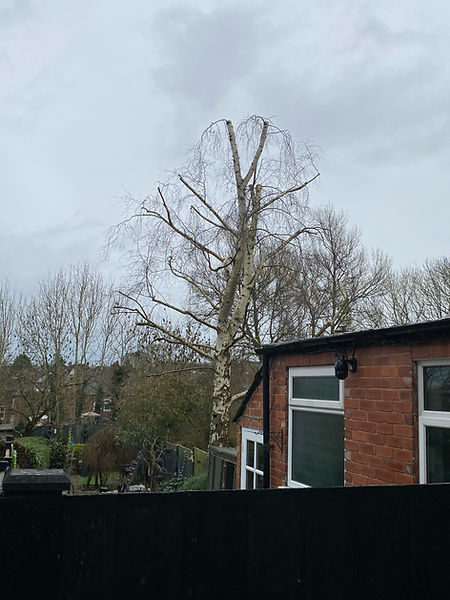
This heavy silver birch prune involved carefully reducing and reshaping a mature Silver Birch (Betula pendula) to improve safety, structure, and overall appearance. Due to excessive growth and weight in the upper canopy, the tree had become unbalanced and was casting significant shade over the surrounding area.
Our team carried out a controlled crown reduction, selectively removing larger limbs and reducing extended branches to decrease end weight while maintaining the tree’s natural form.
All cuts were made in accordance with best arboricultural practices to promote healthy regrowth and minimise stress to the tree. Deadwood was removed throughout the canopy, improving light penetration and air circulation. As fully qualified and insured professionals, we ensured the work was completed safely using appropriate climbing and rigging techniques, with all arisings removed from site and the area left clean and tidy.
🌳 Most Deciduous Trees
Best time: Late autumn to late winter (November–March)
-
Acer campestre
-
Carpinus betulus
-
Fagus sylvatica
-
Quercus robur
👉 Pruning during dormancy reduces stress, limits sap loss, and allows clear visibility of the tree’s structure.
🌿 Trees That “Bleed” Sap
Best time: Mid to late summer (July–August)
-
Betula pendula
-
Acer palmatum
-
Juglans regia
👉 These species can bleed heavily if pruned in late winter or early spring, so summer pruning is recommended.
🌸 Spring-Flowering Trees
(Flower on previous year’s growth)
Best time: Immediately after flowering
-
Prunus
-
Malus
-
Magnolia
👉 Pruning straight after flowering protects next year’s buds.
🌲 Evergreen Trees
Best time: Late spring to early summer (May–June)
-
Taxus baccata
-
Ilex aquifolium
-
Cupressus
👉 Light trimming maintains shape; avoid cutting in very cold weather.