


ARE YOU LOOKING FOR SOMEONE TO CUT YOUR HEDGE?
Hedge Trimming
Hedges can be beautiful during summer and winter but that doesn't come without regular maintenance. Here at Hall's Tree Services we specialize in Hedge trimming and reductions to keep your hedges healthy and beautiful.
Why is Hedge cutting is necessary?
Hedge cutting is a essential part of keeping your hedges healthy and manageable. Hedge cutting is the thinning of hedges to reduce their size and density. It helps trees and plants grow healthy by increasing air circulation and the sunlight they receive.
Safety
We take pride in ensuring safety throughout our team, customers and passing public. Each job is different and that is why we calculate the risk before we start and manage safety throughout.
Regular Maintenance
Here at Hall's Tree Services we know that maintenance matters and that is why we offer Monthly, Bi-Monthly and annual hedge trimming. We can work around your requirements and time schedule.
Techniques
We are capable of taking on any size of hedge and shrub using a range of professional equipment including Tripod Ladders, Mewp, Crane etc but most of the time we will climb in to the hedge to ensure a professional finish.
Summery
If you are looking for a reliable, efficient and affordable hedge trimming service don't hesitate to get in touch with us to see how we can help. All quotes are free!

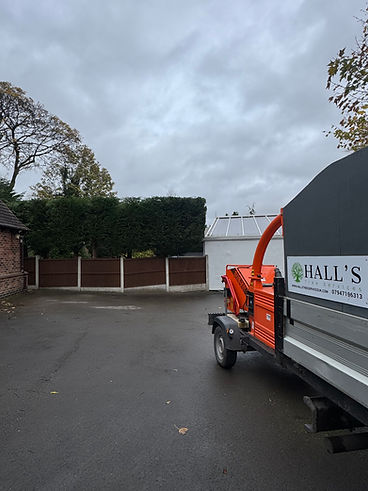

Hedge trimming is one of the most commonly requested garden services, and we’re often asked when the best time to cut a hedge is and how often it should be maintained.
Most hedges benefit from trimming once or twice a year to keep them neat, healthy, and well-shaped. Fast-growing species such as leylandii may require more frequent attention, while slower-growing varieties can often be maintained annually.
A key consideration is bird nesting season. In the UK, nesting season typically runs from March to August, and under the Wildlife and Countryside Act 1981 it is an offence to intentionally damage or destroy an active nest. Before carrying out any hedge work during this period, it’s essential to check carefully for signs of nesting birds. If a nest is found, trimming must be postponed until the young have fledged. Outside of nesting season, late winter or early spring is often ideal for more substantial reductions, while light maintenance trims can be done in late summer to keep hedges tidy through autumn and winter.

